Sleep: Translation to the Clinical Setting
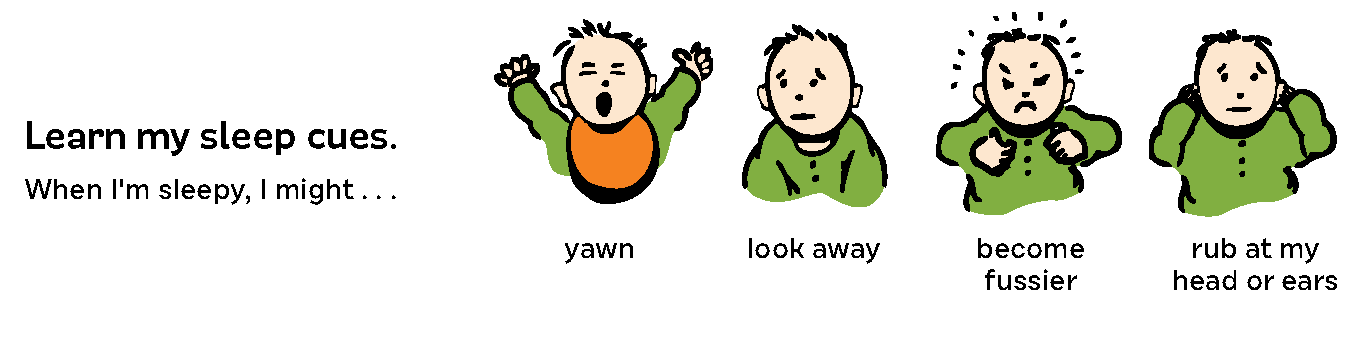
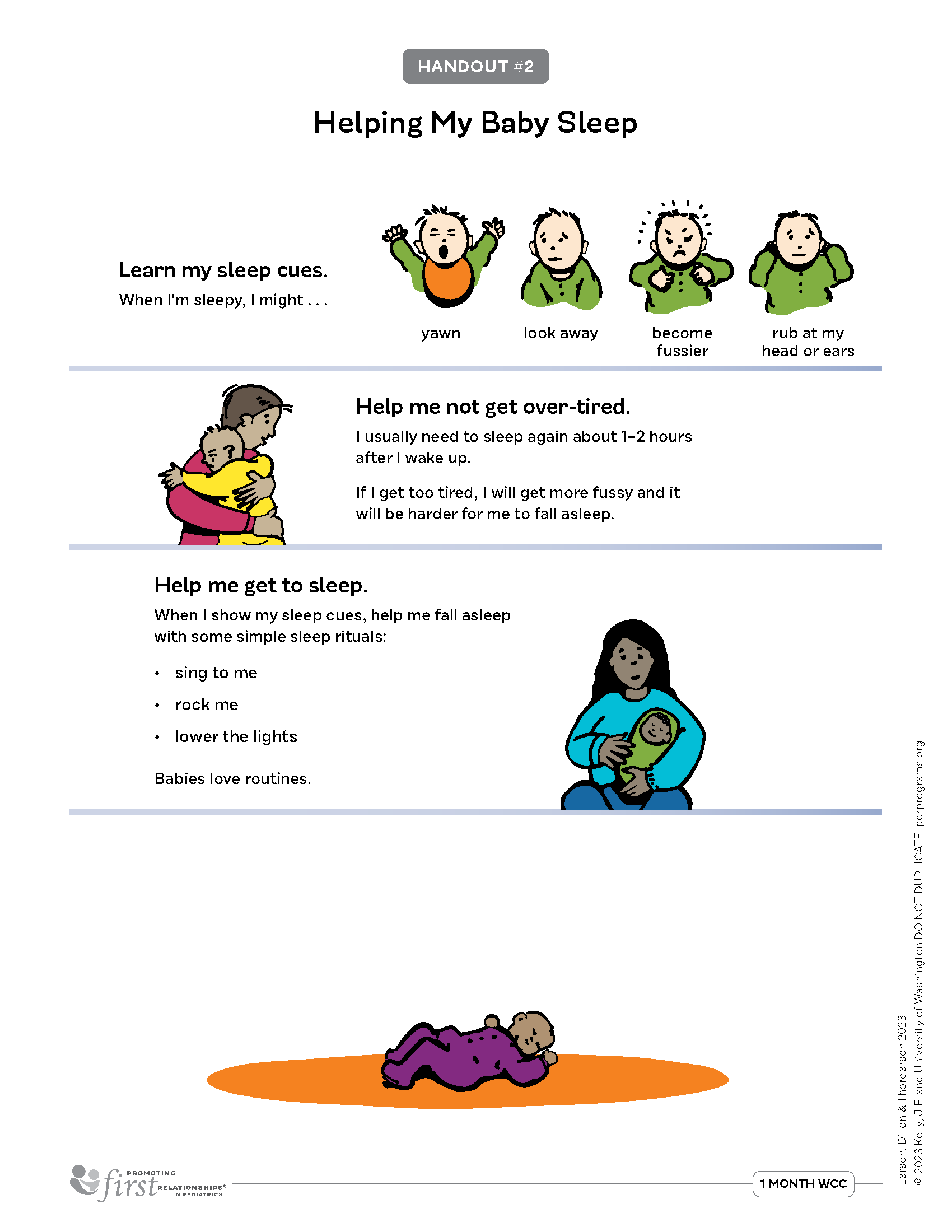
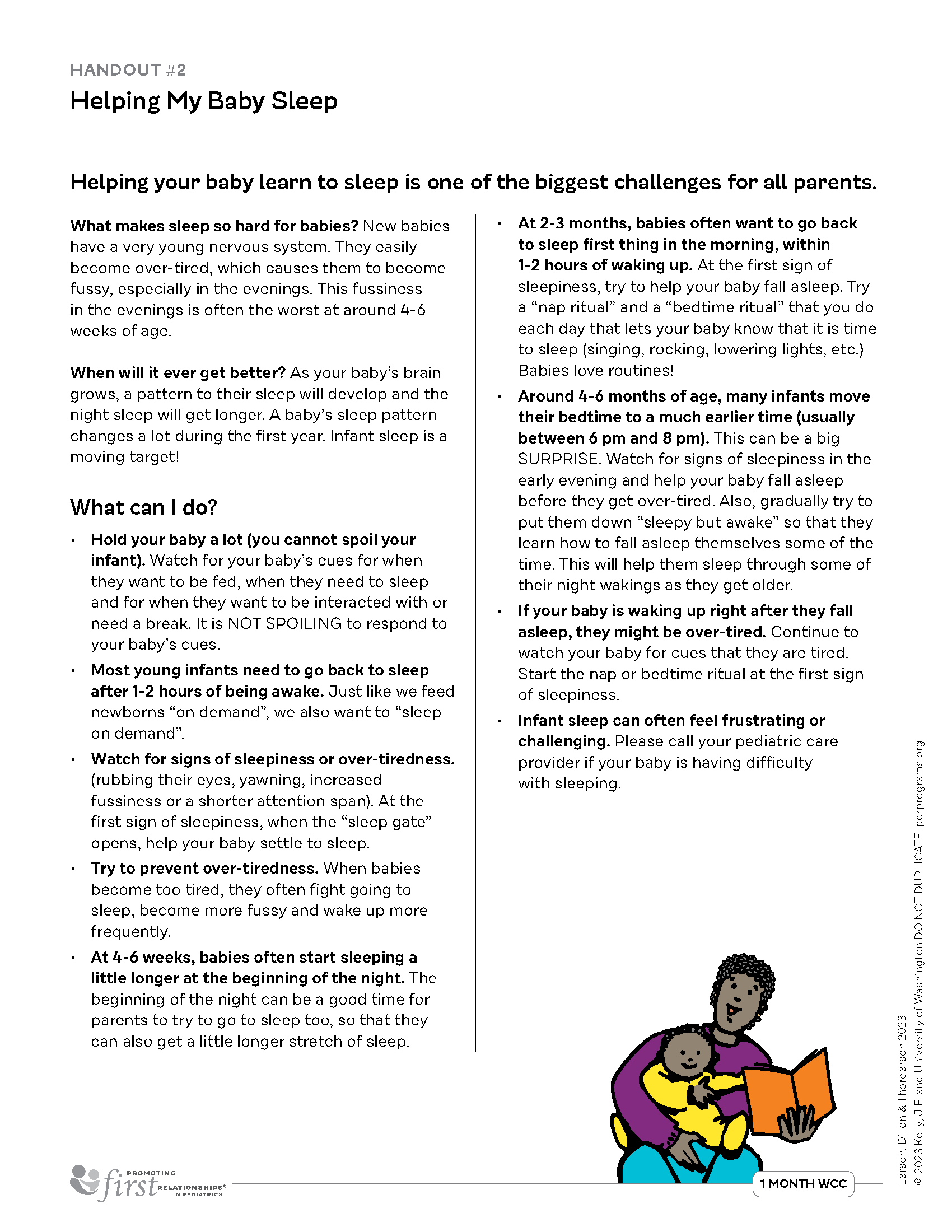
- Help parents recognize their baby’s sleep cues from the very beginning. This helps parents get to know their baby and feel effective at protecting their need for sleep. There are many maturational changes to the baby’s sleep in the first 3 years and being aware of and responding to sleep cues can help caregivers with each transition.
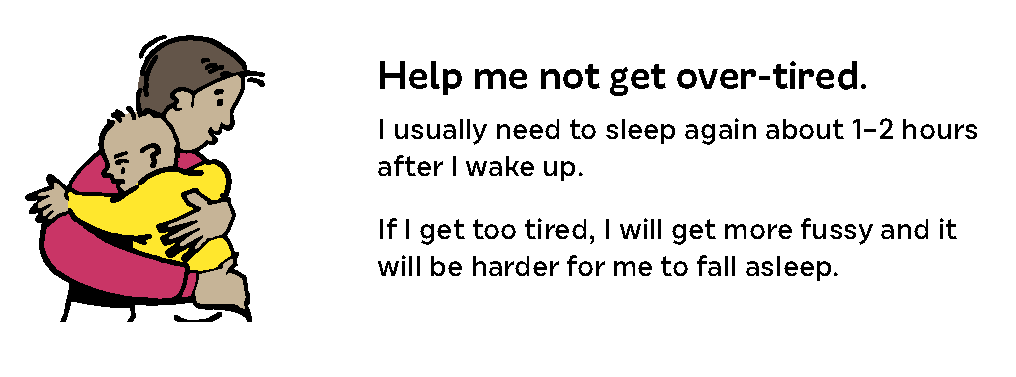
- Protect young infants from getting over-tired. At first young infants will not be able to stay awake comfortably for more than 1-2 hours.
- Reassure parents that newborns and young infants need a lot of assistance with transitioning to sleep. Following their infant’s cues for sleep and starting some calming rituals for sleeping times will set the stage for healthy sleep patterns as the infant brain matures.
- As a reminder, given the newborn’s immature stress regulation system and their inability to self-soothe, the first 3 months are NOT a time to sleep train or cry it out.
- As the baby starts to enter sleep in the Quiet stage (10-12 weeks) and falls into deep sleep more easily, parents can try to fade away their support to begin the process of the baby learning to self-soothe to sleep. This transition to self-soothing to falling asleep from a “drowsy but awake” state is a learned process and often can take many months depending on the baby’s temperament and rate of maturation.
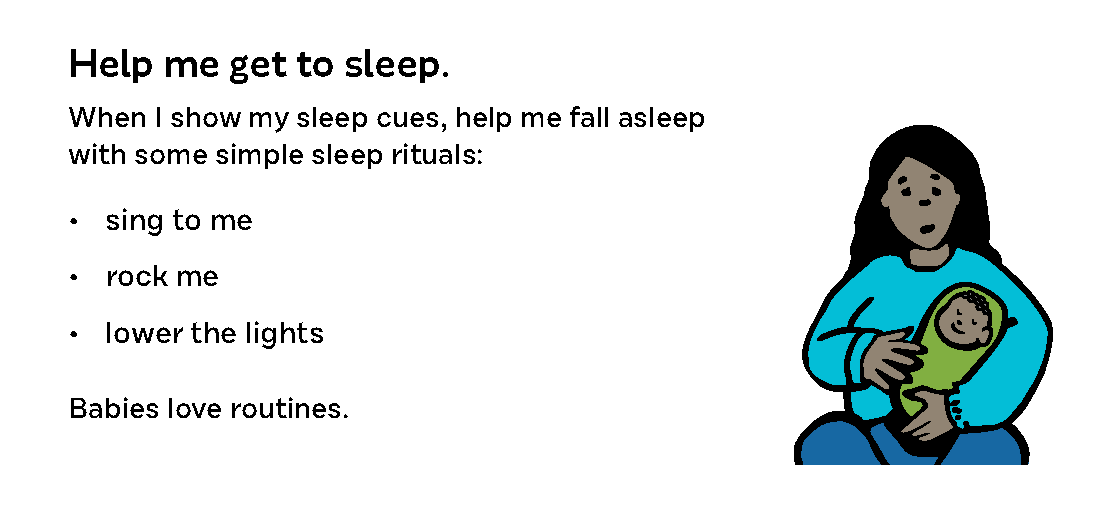
- Encourage parents to have a short bedtime and naptime ritual to help the baby transition to sleep. Babies love routines. Calming routines around sleep help the baby anticipate what’s next, feel seen and understood and settle into a pattern.
Older Infants
- Help parents watch for signs that the need for an earlier bedtime at 3-4 months is emerging and help parents protect their baby from the over-tired state. Often, treating the first sign of evening sleepiness as bedtime and helping the baby return to sleep after night wakings improves their baby’s sleep and fussiness.
- Reassure parents about the long maturational process of sleep and the multiple expected difficulties:
- Frequent night-wakings at first
- Shorter naps in younger infants before they can link multiple sleep states
- The ease with which infants become over-tired and then have more difficulty falling asleep or staying asleep
- The long transition from 3 naps/day to 2 then to 1 and then to none.
- The modern interference with falling asleep at bedtime from a late afternoon or early evening nap during a car ride home
- Emphasize the centrality of the parent’s role in reading and responding to cues. This can help parent’s stay the course and feel important and effective in their role of knowing what their baby needs.

This handout has incorporated the 3 most important pieces of information about sleep at any age:
- The importance of recognizing and responding to sleep cues
- Preventing the over-tired state
- Having predictable, soothing routines to help the transition to sleep