Feeding: Translation to the Clinical Setting
Infant Feeding
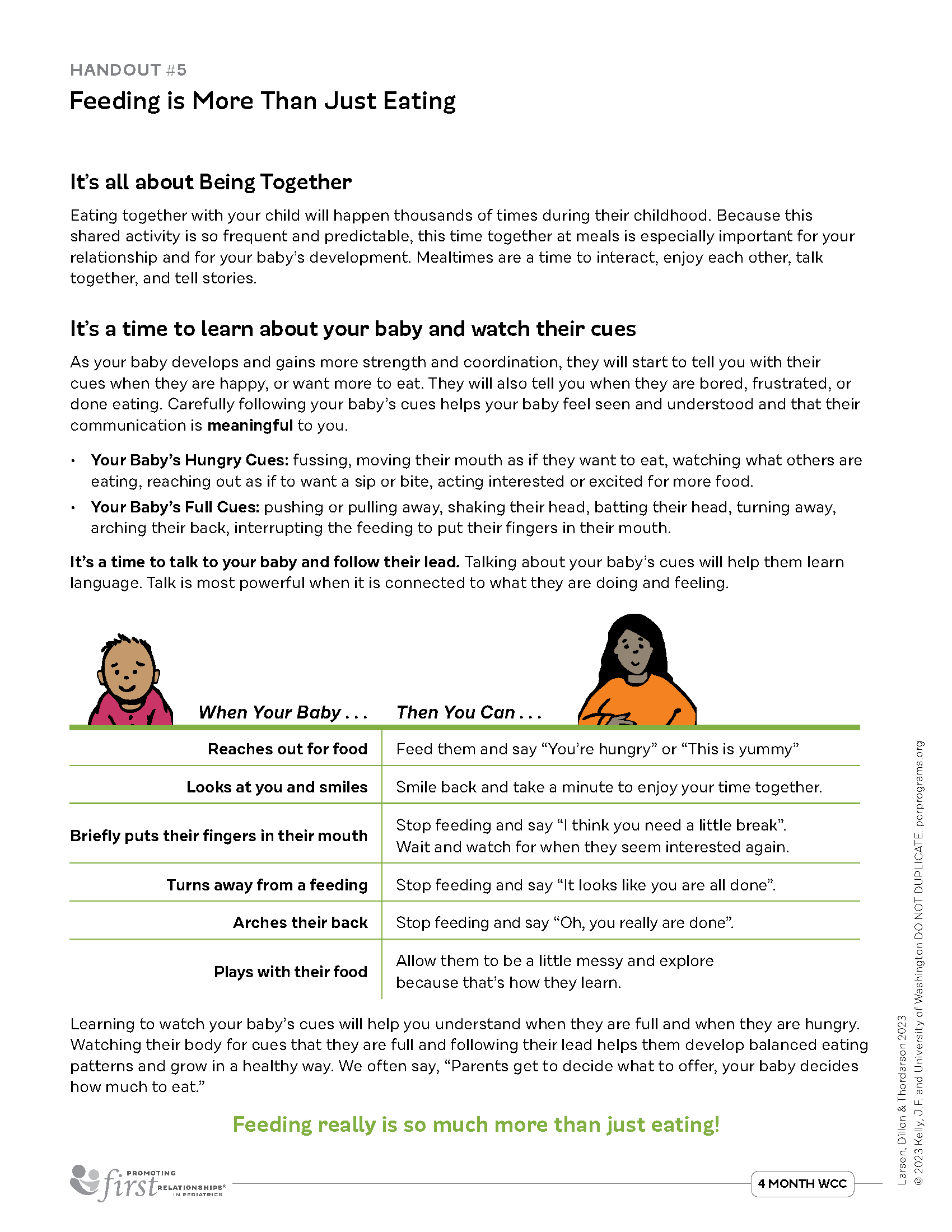
- Support responsive breast and bottle feeding by helping parents notice hunger and satiety cues at the very first newborn visits. These hunger and satiety cues can often seem “hidden in plain sight.” Being oriented to seeing cues and responding to them sensitively builds the parent’s competence as their baby responds to their sensitive caregiving.
- Given how important the feeding relationship is to the parent’s sense of well-being and the child’s social-emotional and physical development, seek extra feeding support and offer more frequent follow-up to help with early feeding difficulties. Pressured feeding styles often start very early in the newborn period and can be difficult to change.
- Provide more education and support for parents who bottle-feed (most parents at some point, actually) to help encourage responsive bottle-feeding.
- Check in with parents often about how feeding is going. Ask about what cues they are noticing with feeding and whether they can tell when their baby is hungry or full to hear their perspective and to offer strengths-based feedback and reassurance that following feeding cues is best for infant growth.
Introduction to Solid Food
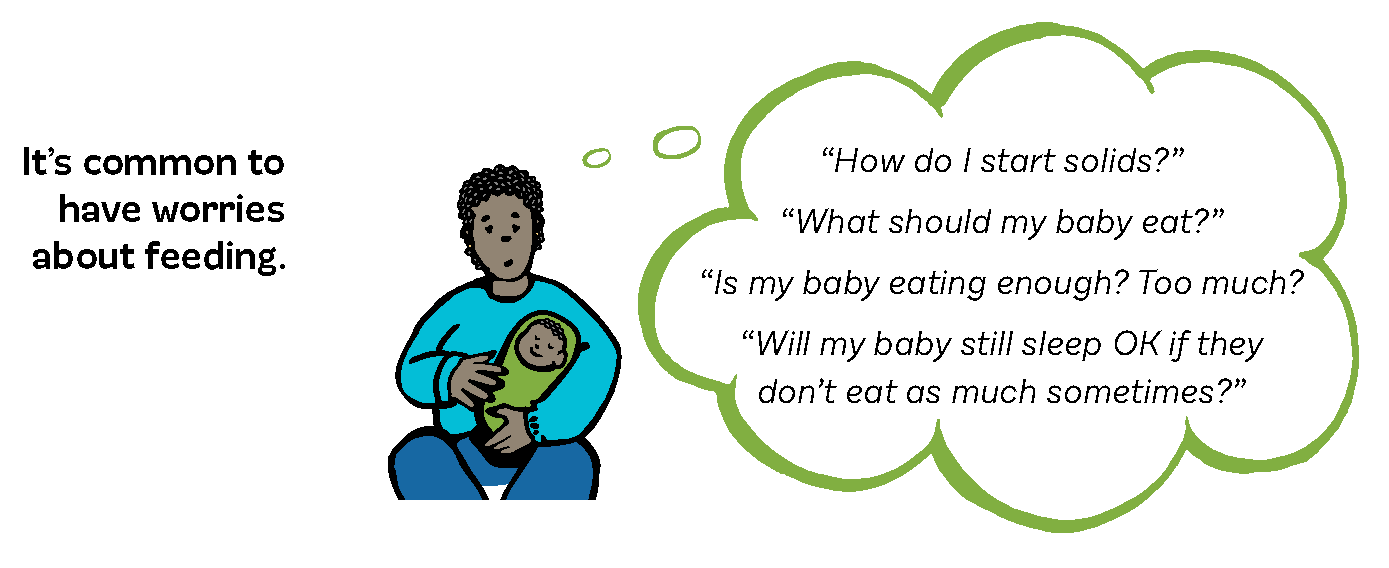
- At the 4-6 month visits, ask parents if they think their baby is showing any interest yet in what they are eating. This can open a conversation about the baby’s readiness from the perspective of what the parents are already observing. This helps parents gain confidence in their observations and helps frame starting solids in terms of the feeding relationship.
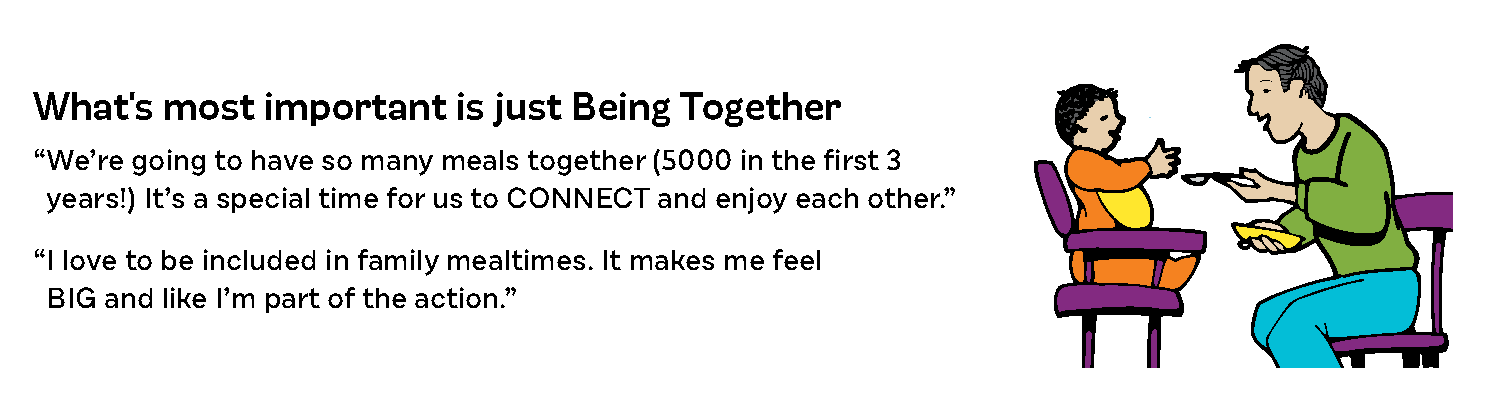
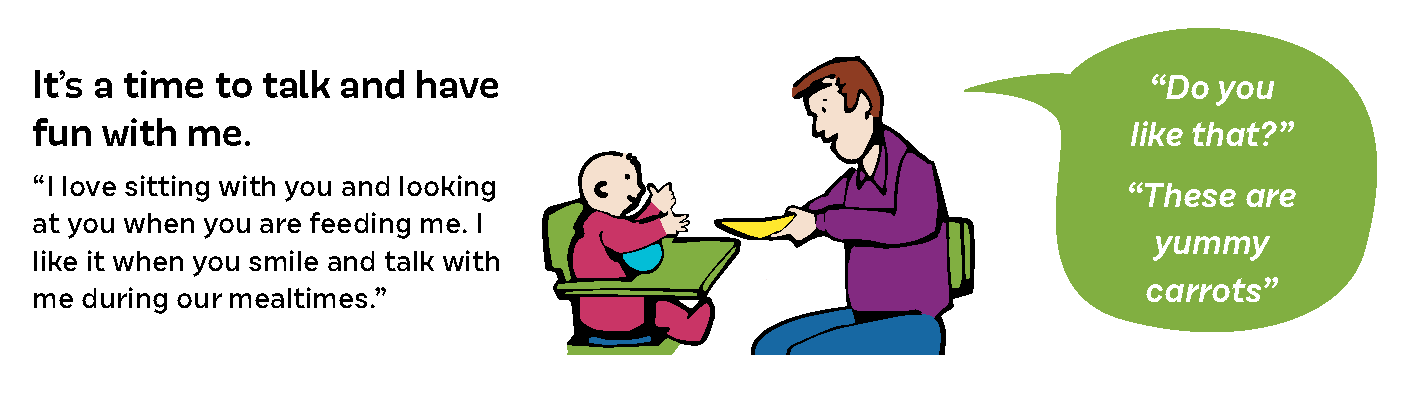
- Frame starting solids in terms of the feeding relationship. Encourage parents to think of starting baby foods as their chance to have the baby eat with them. Babies are hard-wired to want to be part of these communal mealtimes and these shared moments of eating together are about so much more than just the food. There is turn-taking, back and forth conversation, imitation, and shared delight.
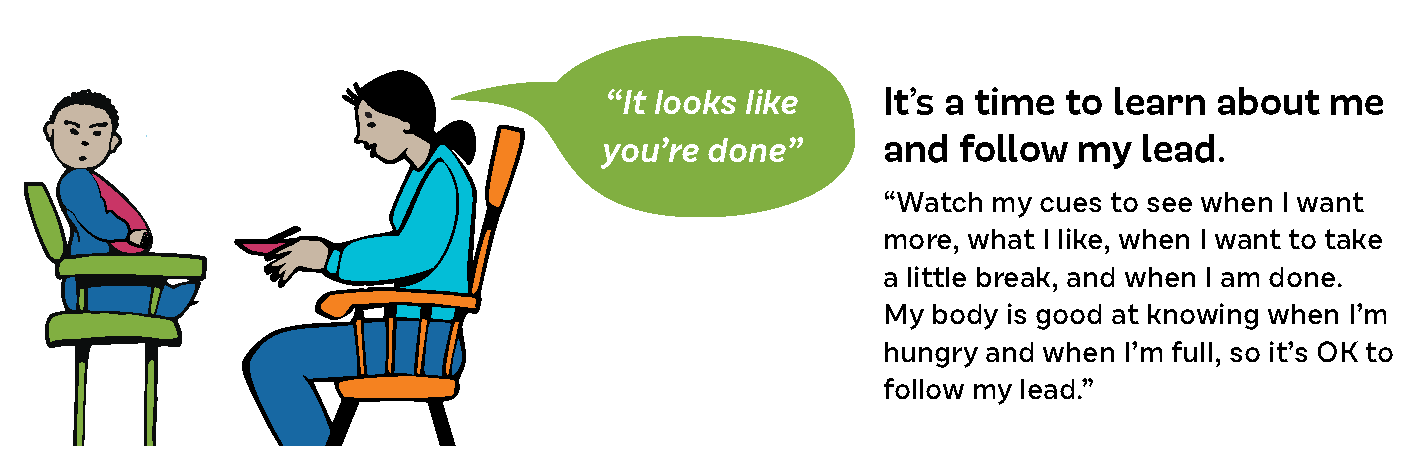
- Providers can notice and comment on any feeding cues that are observed during the visit. For example, if it fits during the visit, the provider could say “Oh, it looks like you are done” or “Guess you’re stopping to talk to daddy for a minute” or “It looks like you want more.” This helps parents notice cues and see that following cues is important and not spoiling the baby.
- Once babies have started eating some pureed food, encourage the family to eat together whenever possible. Older infants love to feel like they’re big and part of the action.
- As the baby becomes more curious and social, feeding interruptions become more common. It continues to be important to follow the baby’s cues, which tell parents about the baby’s inner state, i.e., if the baby is still hungry or getting full, tired, over-stimulated, ready for something new, etc. Reassure parents that feeding disruptions are common and that babies will naturally stop eating when they are full and that it is okay to follow their baby’s lead and stop the feeding.
- As the older infant transitions to eating table foods, continue to encourage eating together and noticing, responding to, and talking about cues the baby is giving during their mealtimes. Mealtimes are where a lot of the emotional tone of the family is set very early. Help parents focus on enjoying their time together and following their baby’s cues rather than getting overly worried about exactly what foods and how much their baby is eating.
Toddler Mealtimes
- When older infants and toddlers start to show the expected, normal decrease in their appetite between 12-18 months, it can be reassuring to show caregivers the growth chart which shows the long plateau in weight gain during the toddler years.
- Reassure caregivers that being picky and often eating very little at mealtimes is normal at this age. Empathize with parents that it can be stressful to watch their toddler eat very little every day, but that the child’s appetite and intake is supposed to drop off at this age. By offering 3 meals a day and a morning and afternoon snack, their child will have plenty of opportunity to take in calories if they are hungry, and parents do not need to override their child’s satiety cues.
- Discuss the “division of responsibility at mealtimes”, i.e., the parent’s job “stops at the plate” and then it is up to the baby to eat if they feel hungry, and that parents do not need to coax them to eat more or cook favorite foods or extra meals. (Ellyn Satter)
- Continue to emphasize that the feeding relationship and family mealtimes are a key time to be responsive to cues and to share language and moments of delight.
- Emphasizing the centrality of the parent’s role in reading and responding to feeding cues can help parents stay the course during the many different feeding changes and help parents feel important and effective in their role of knowing what their baby needs.
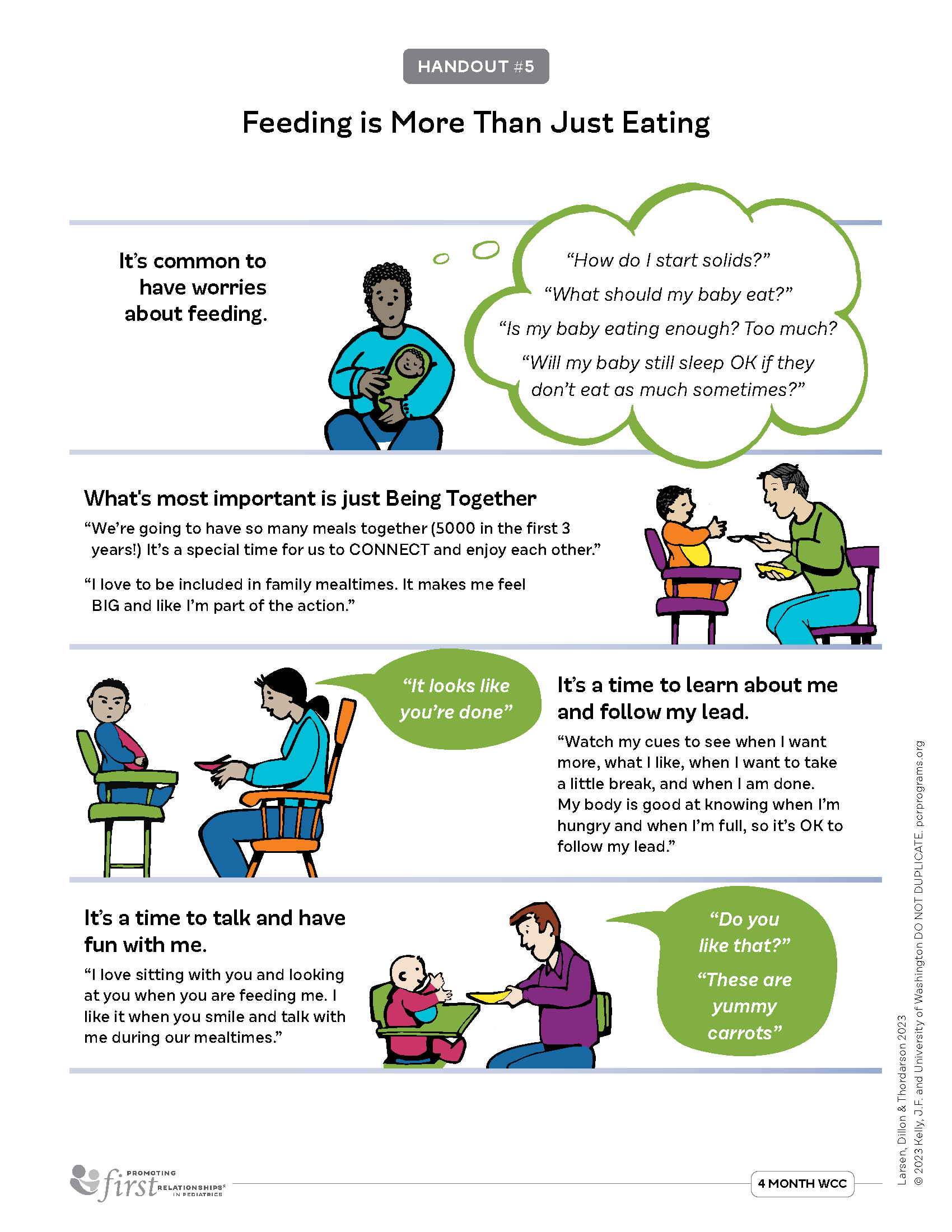
Handout #5 Feeding is More than Eating below helps parents understand the importance of the feeding relationship.