
Feeding: 8-9 Months
Older infants gain new oral-motor skills. They have more mature chewing movements and are now able to close their mouth fully and move their tongue from side to side to get food into a bolus to swallow. These new oral-motor skills combined with better sitting balance, more coordinated reaching for objects and the development of a pincer grasp enable the baby to transition from pureed solids to eating more foods from the table.
Older Infants also have more sophisticated social skills and joint (shared) attention skills. They want to be part of the conversation at mealtimes. They often want their own spoon and to eat what others are eating.
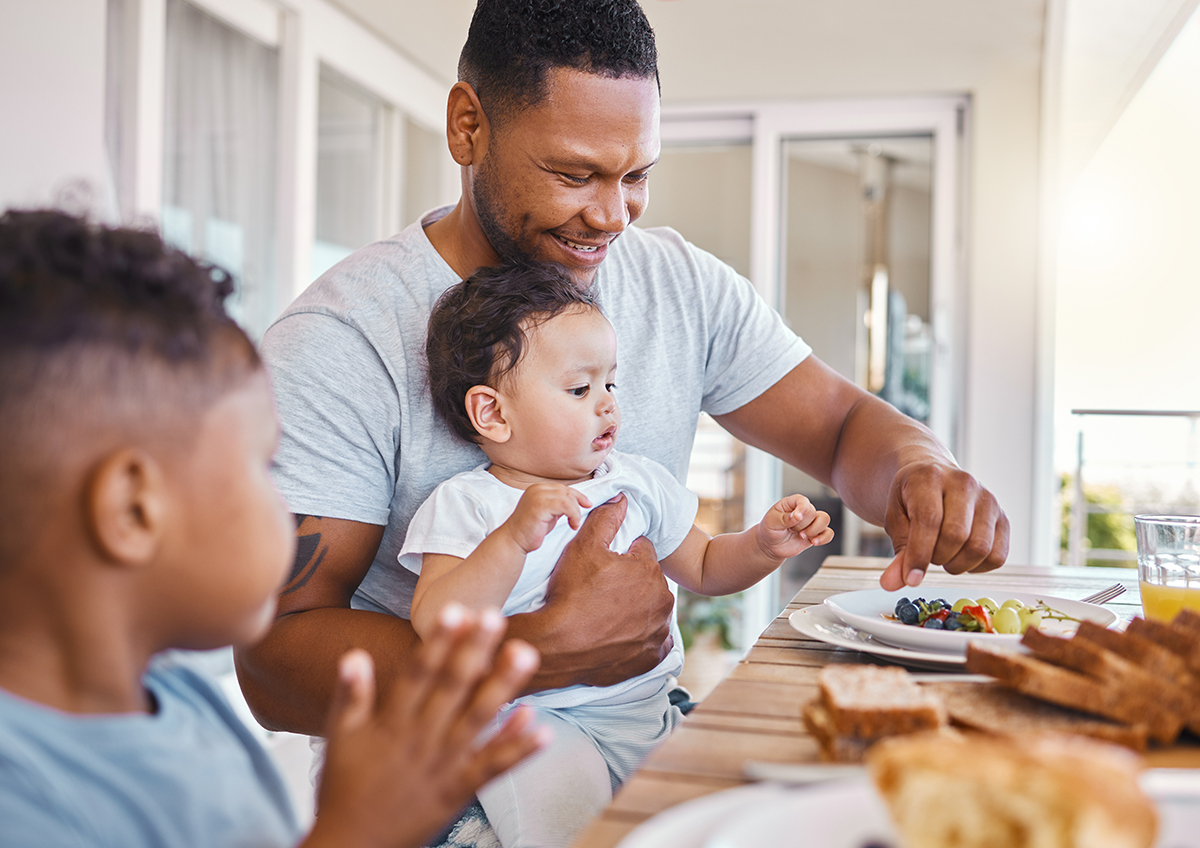
Sometimes with the introduction of table foods, some infants will start to refuse pureed food and prefer to eat only table foods, since they often prefer the taste while also wanting to imitate what everyone is doing around them.
Talking with babies about cues they are sending while eating together helps with language development and helps the baby feel seen and understood (e.g., “Are you done? Did you like that? Do you want more?”).
Parents can feel worried that they need to over-ride their baby’s cues for when they are full so that they can get a set amount of food in at a mealtime. Reassure parents that they can continue to follow their baby’s cues for when they want more, are full or not interested.