
Feeding: 4-6 Months
At 4 months of age, babies continue to gain efficiency with feeding, with the volume per feeding continuing to increase (on average, 4-6 oz/feeding 6-8X/day). Night sleep is becoming more consolidated so the interval between feedings during the night also lengthens.
Babies gain body fat rapidly in the first six months of life and reach their highest percentage of adiposity around 9 months of age. Parents can worry about their baby’s rapid growth at this stage and conversely, can worry when later in the first year, the baby grows taller and their overall percentage of adiposity decreases.
Given their rapid brain development, babies are becoming much more curious and social which can lead to feeding interruptions where the baby stops to look around or interact with those around them. Parents can worry about this, but it is actually a good sign that their baby is getting more curious.
Between 4 and 6 months of age, most infants start to show interest in what their parents are eating. There is a developmental window that opens at this age for the introduction of solids (aka complementary foods). Babies show interest during mealtimes by visually tracking what others are eating, by making movements with their mouth or reaching out for a sip or a bite.
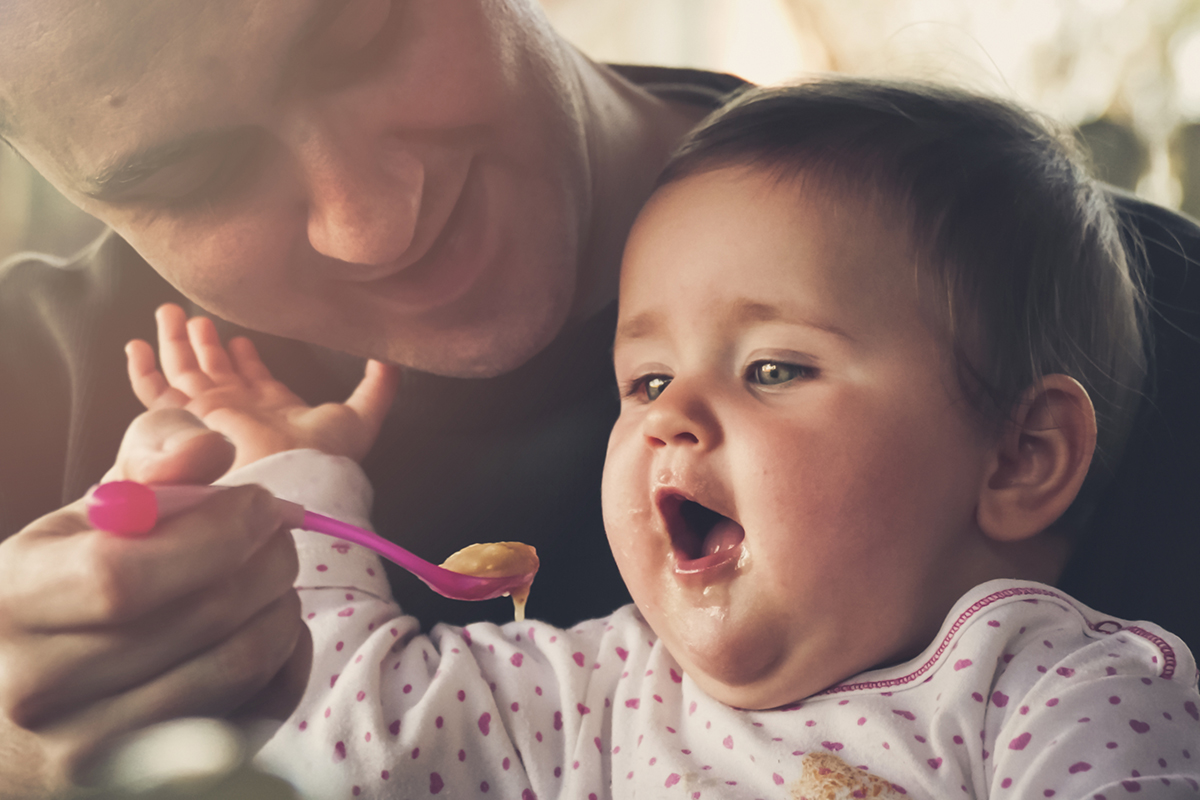
It continues to be very important that parents follow their baby’s hunger and satiety cues. It can be easy to lose sight of this with a baby that is changing so fast. Each feeding interaction is a chance for parents to be very responsive to cues. It is these thousands of interactions that literally co-construct their baby’s brain development.
When parents talk to their baby during feeding about cues and what their baby is communicating, language is learned more readily.