Newborn
Newborns are born ready to relate. At birth, they already prefer looking at faces and recognize familiar voices. They can track to the midline. Their vision is about 20/400, and they see best at a distance of 8-10 inches – the exact distance a cradled baby is from their parent’s face.

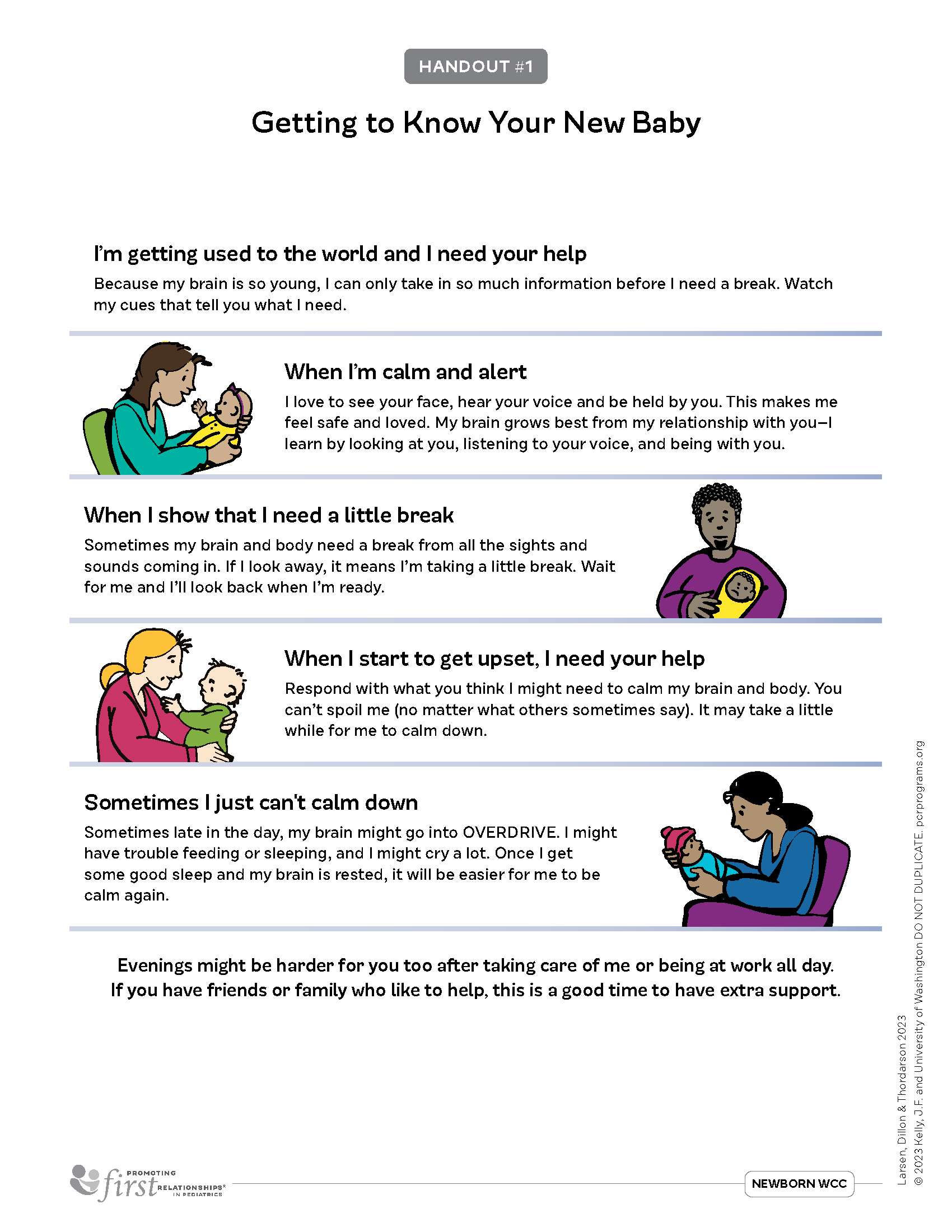
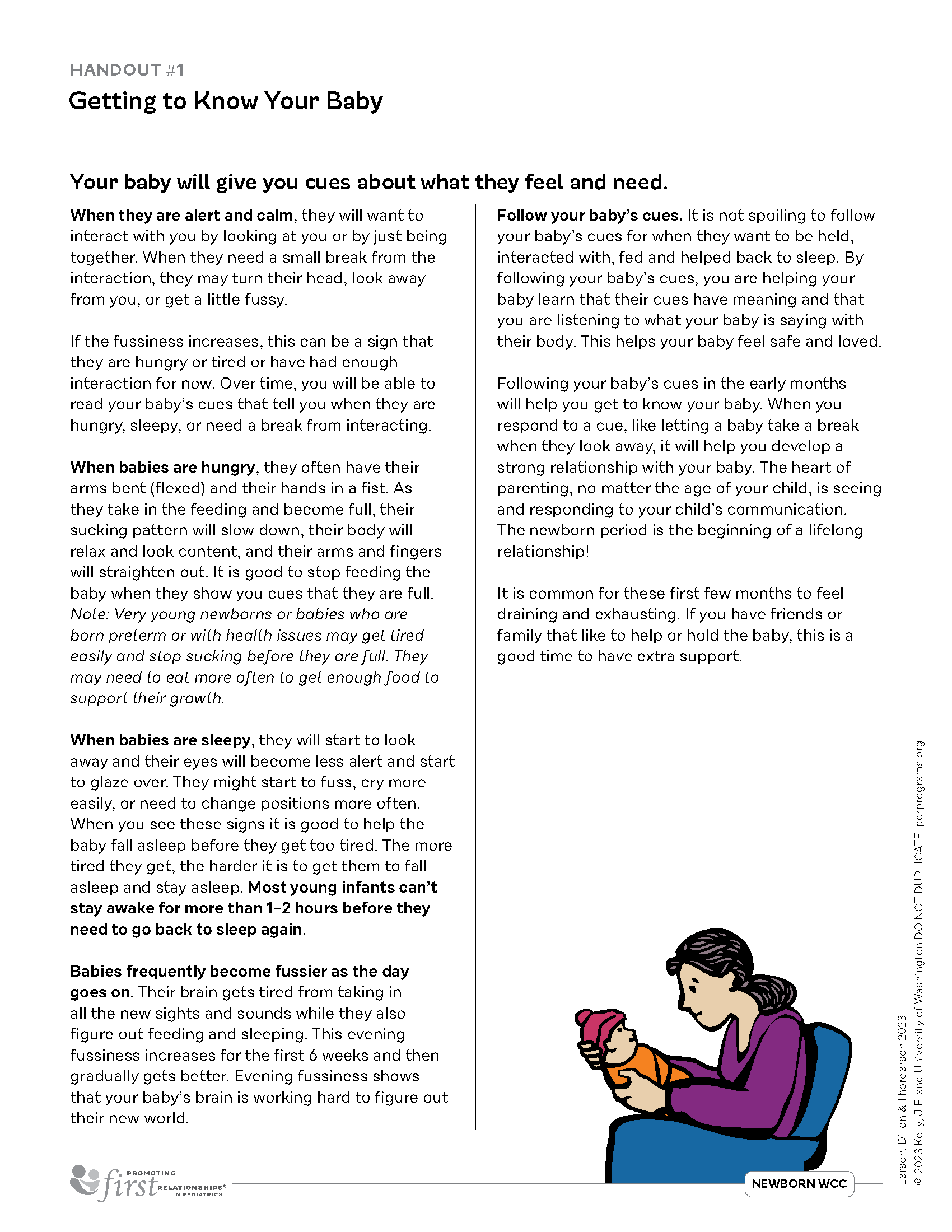
Right from birth, newborns give cues to help regulate their internal state. They give cues like closing their eyes and looking away to signal over stimulation and cues for hunger, satiety and sleepiness.
Infants are hard-wired to use crying to seek proximity to their parent for safety which can be exhausting for parents.
Evening fussiness emerges 1-2 weeks after 40 weeks conceptual age and peaks at 6-8 weeks of age. Parents of premature or late preterm babies will often have a “honeymoon period” with a quieter and sleepier baby who will start to become fussier as they near a gestational age of 40-41 weeks. This increased fussiness can worry parents, especially given their increased vigilance already from having a premature baby.
Evening fussiness may be brain-related from the fatigue of taking everything in all day. During these periods of fussiness, infants will have difficulty with feedings and transitioning into sleep and staying asleep. They will cry more and need to be held more. Once the infant does settle into sleep, they often wake up in a much more organized state, as if their brain has “rebooted” and their state transitions are now back online. Describing this pattern for families and framing newborn crying as adaptive and developmental, can lessen caregiver’s frustration and normalize their experience.
Handout #1 Getting to Know Your New Baby helps parents understand their newborn’s behavior and respond sensitively.