Alleviation of Distress: Puppy Learning to Go Down the Stairs – Scaffolding in the Zone of Proximal Development
Hobbes the puppy is learning to go down to the stairs. He’s giving cues that he’s worried (literally walking away from the stairs which is a strong disengagement cue) and leaning into his puppy owner who is trying to help him. His puppy owner realizes that he needs to kneel to be closer to the puppy’s level and to go one step at time. The other puppy owner recommends switching the puppy to the other side of the stairs to make the puppy feel safer, since the stairs are open on one side. Together, by breaking the task into manageable smaller pieces (in the puppy’s “zone of proximal development”-see below) and maintaining proximity to the puppy and skillfully helping to regulate his upset feelings, the puppy is able to learn this new skill of going down the stairs.
Teaching Points
The “zone of proximal development” (ZPD) is the concept that optimal learning occurs from social interactions with a “more knowledgeable other” who is able to see what the learner knows and can gradually help the learner add skills and knowledge. (Lev Vygotsky 1931)
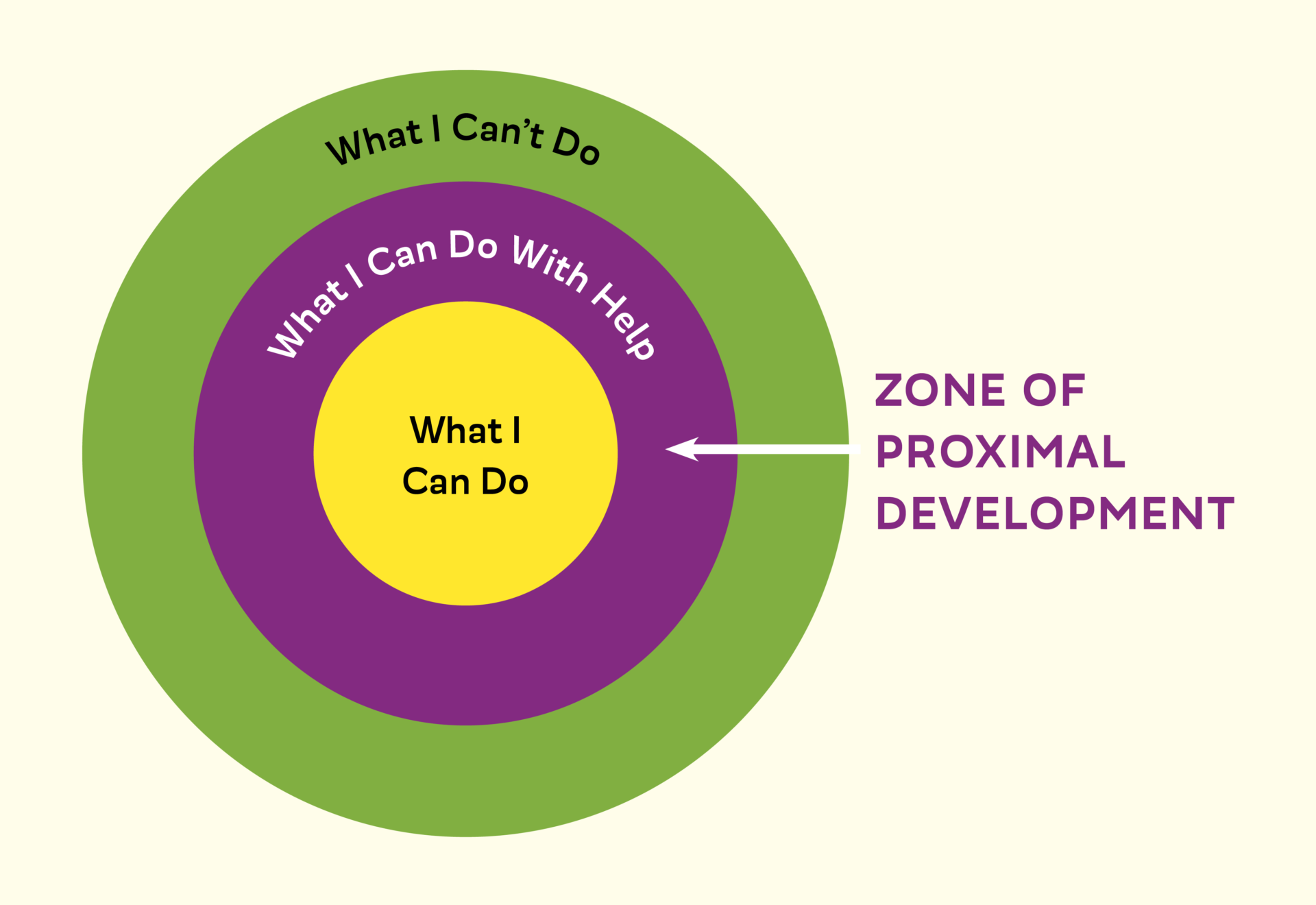
A key task of parenting is to provide co-regulation and scaffolding in the child’s zone of proximal development as the child acquires new skills and competencies. Working within the child’s ZPD requires attunement to the child’s developmental level and emotional state. It also requires co-regulation where the parent sees the child’s needs and helps regulate their emotions by empathizing, reducing frustration and offering help where needed, like the puppy owners did for the puppy in the video.
This concept has great relevance for providers as we work with families and students in their zone of proximal development (ZPD) and help parents do the same for the children.