Toddlerhood: 12-24 Months
Between 12 months and 24 months, toddlers have a “language explosion” in both their receptive and expressive language. At 12 months, most babies understand about 20-100 words and say one or two words. By age 2, they will understand about 150-300 words and say 50-100 words.
It is helpful to think of the 2-year-old’s development with “The Rule of 2’s”: By two years of age, most toddlers can:
- say 50 words or more
- combine 2 words (ideas) together, i.e. “Mommy, go” or “Daddy, up”
- Follow 2 step directions
- Problem solve with 2 steps (i.e. get a stool to reach something or bring their shoes to their parent if they want to go somewhere).
Joint attention continues to become more complex. Proto-imperative pointing, i.e. pointing to obtain a desired object is typically seen between 12-14 months. Proto-declarative pointing i.e. pointing to share interest develops next around 14 months. Pretend play is also starting to emerge.
At the same time, toddlers are becoming more coordinated and motorically busy.
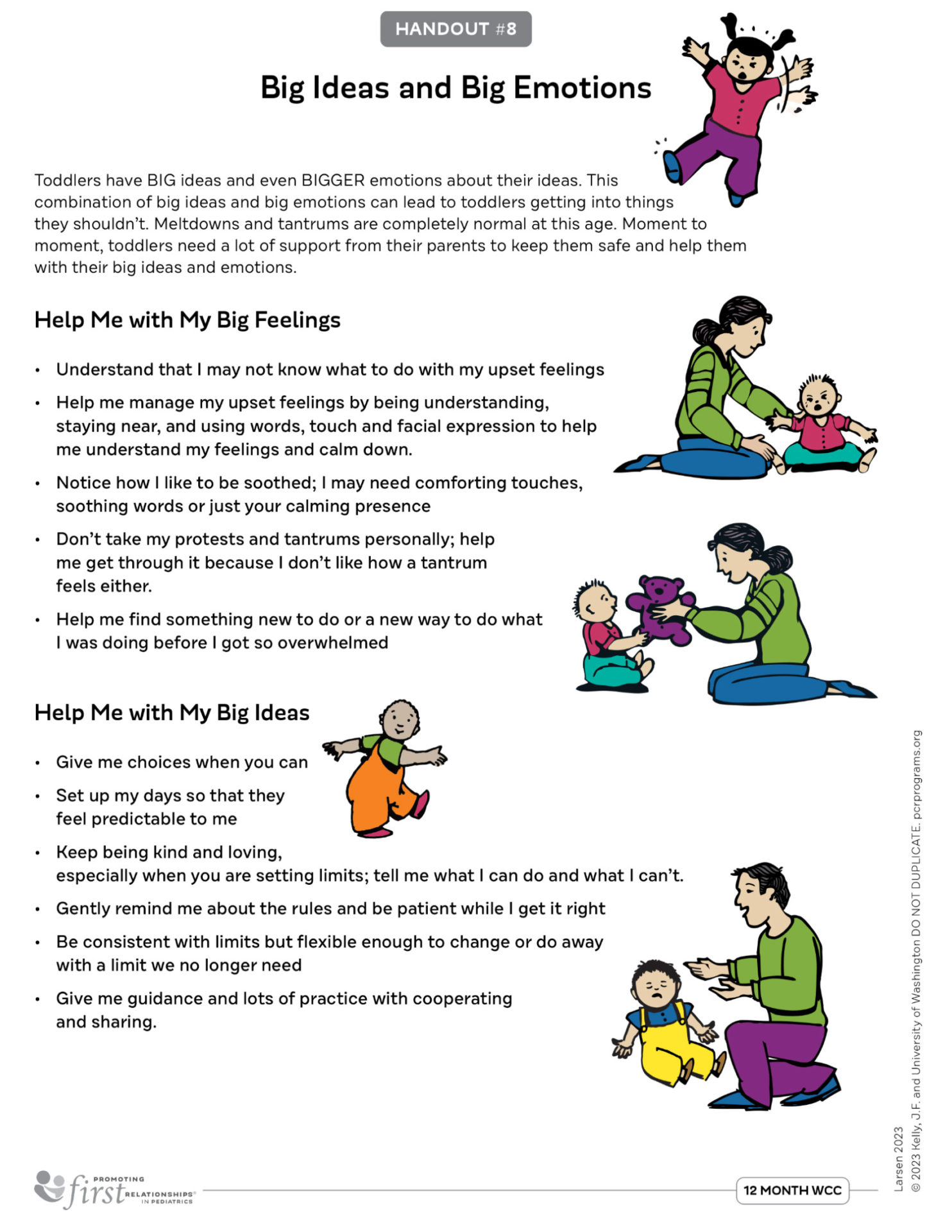
Bigger expressions of frustration, protesting and tantrums start to occur, given the developmental mismatch between the toddler’s BIGGER ideas and even BIGGER emotions.
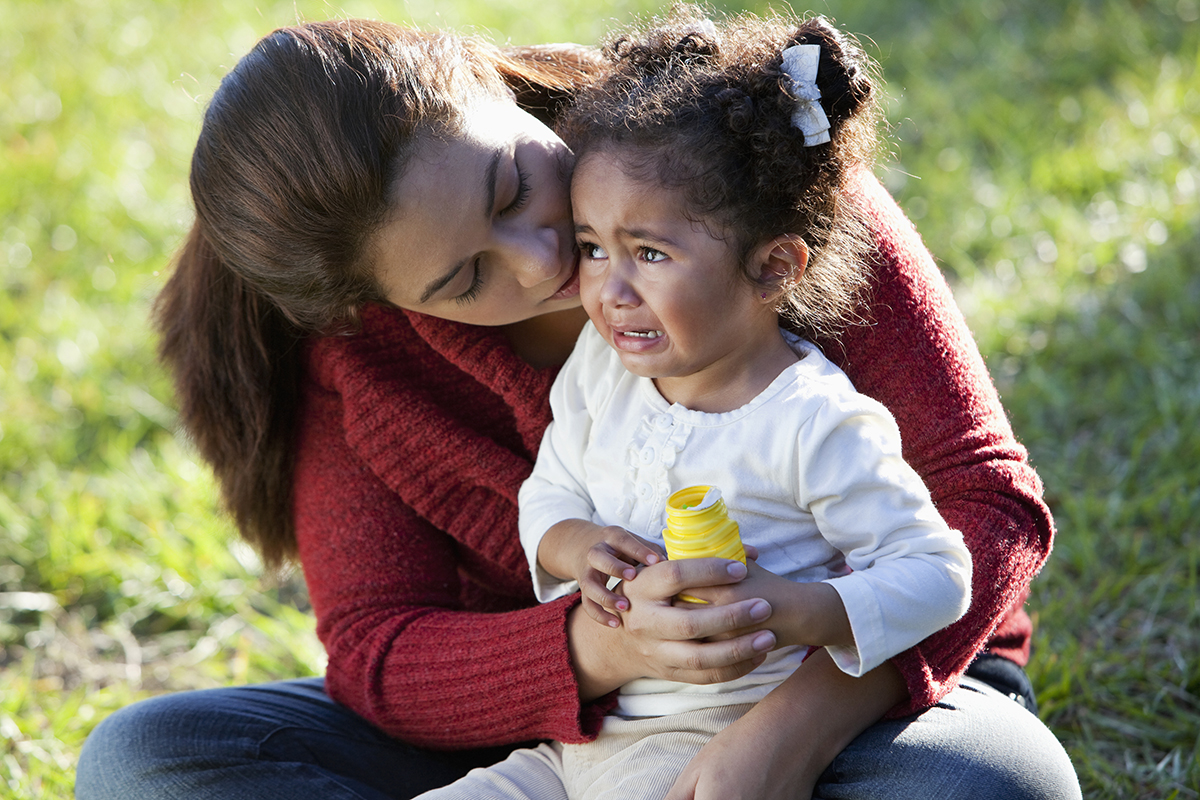
The need for co-regulation continues to increase as the “developmental mismatch” between their baby’s cognitive development and emotion regulation becomes larger. The “Terrible Twos” often start right at the first birthday.
Toddlers are just starting to develop inhibitory capacity but overall lack impulse control. They often will continue to do something after parents say no. Parents can interpret or mistake this persistence/non-compliance as willful disobedience and feel triggered by their toddler’s misbehavior. This persistence is a lack of inhibitory control and a sign that the toddler needs support from the parents to change direction. Inhibitory capacity is co-constructed through the relationship with the parent.
Flexible limit-setting starts to be more important so that toddlers can learn as they start more mobile exploration of their world. Limits applied flexibly and gently contribute to the toddler’s world feeling predictable and safe which helps with their ability to manage their emotions.
Babies love stories and nursery rhymes at this age. We all understand and learn language better when it is directed contingently at what we are doing.
Handout #8 Big Ideas and Big Emotions is below.