Reframing Challenging Behavior: It’s All About Feeling Connected
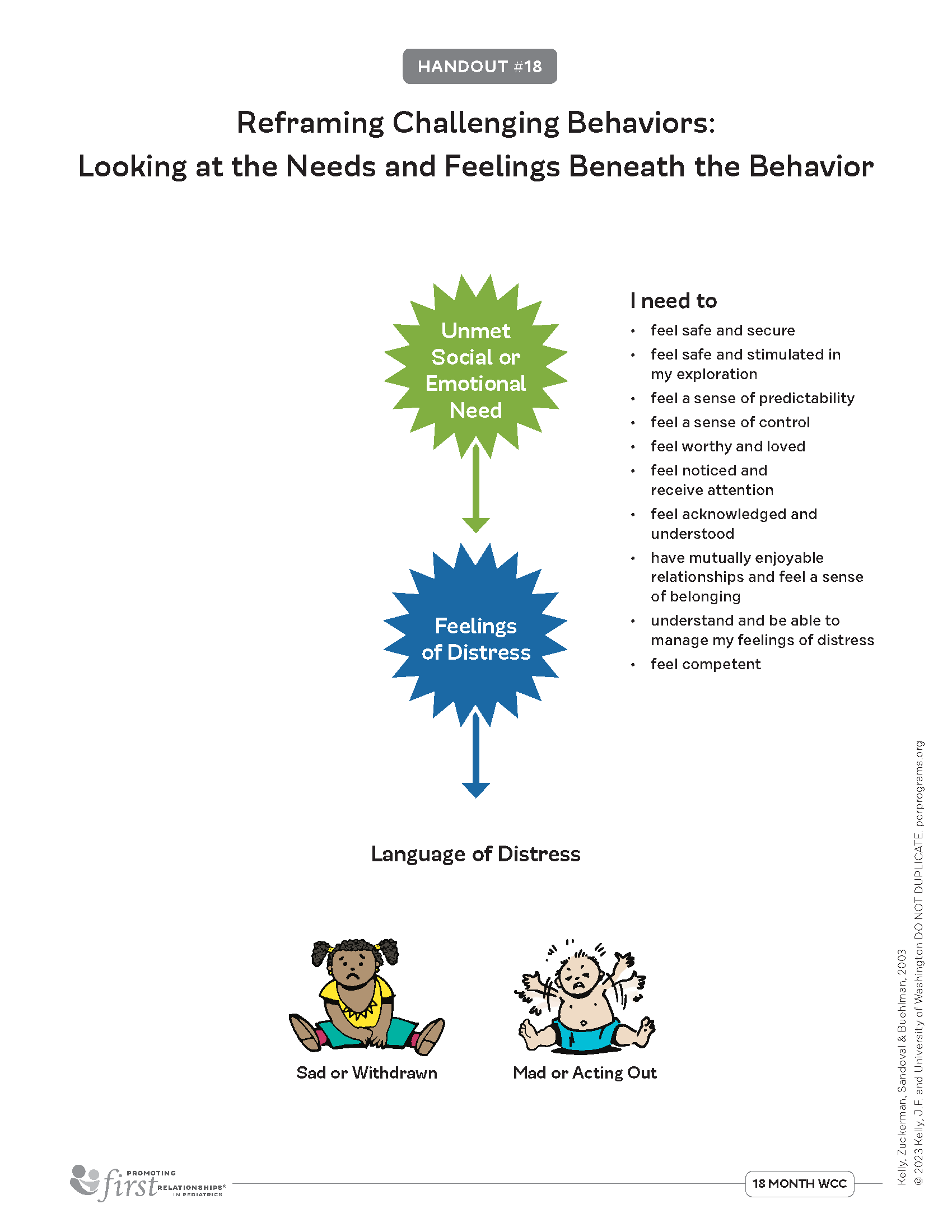
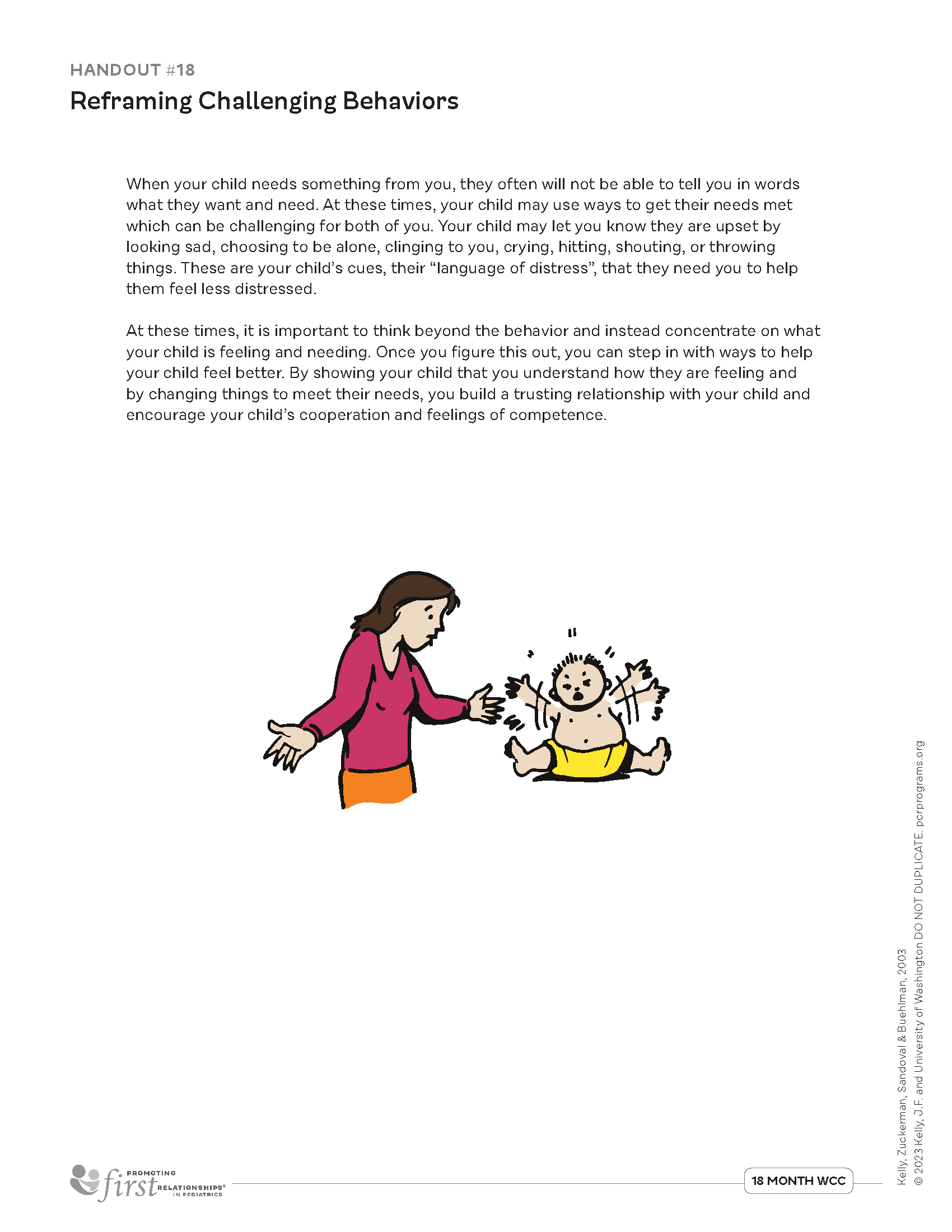
Viewing a child’s difficult behavior as their “language of distress” is a powerful reframe. It allows the parent to look beneath the behavior and consider what the child is feeling and needing instead of approaching the behavior as something wrong with the child (or wrong with what the caregiver is doing).
A child’s “language of distress” is the child’s attempt to meet their underlying social-emotional needs and their attempt to feel connected to their parent. This reassuring and hopeful framing for parents underscores their importance to the child and reduces any shame the parent may be feeling about the difficult behavior. This reduction in feelings of shame can help the parent feel calmer and increase their ability to carefully think about what their child may be needing.
Reflecting with parents about what their child may be needing helps to promote the parent’s ability to observe the situation from the child’s viewpoint. This shift builds empathy between the parent and child and allows for a reframing of the observed behaviors. Once the parent reframes the child’s behavior in this way, their desire to connect with the child around their need becomes easier and more natural. This reframing shift also reinforces the important role the parent has in their child’s development.
Handout #18 Reframing Children’s Behaviors below shows how unmet social emotional needs lead to feelings of distress which lead to the child’s language of distress which is expressed in the form of acting out or withdrawing behaviors.