
Understanding Children’s Behavior as Their Language of Distress
A child’s behavior arises from what they are feeling and needing in the moment. Difficult behaviors in children are how a child communicates their feelings of distress about what they are feeling and needing and often present in two different ways:
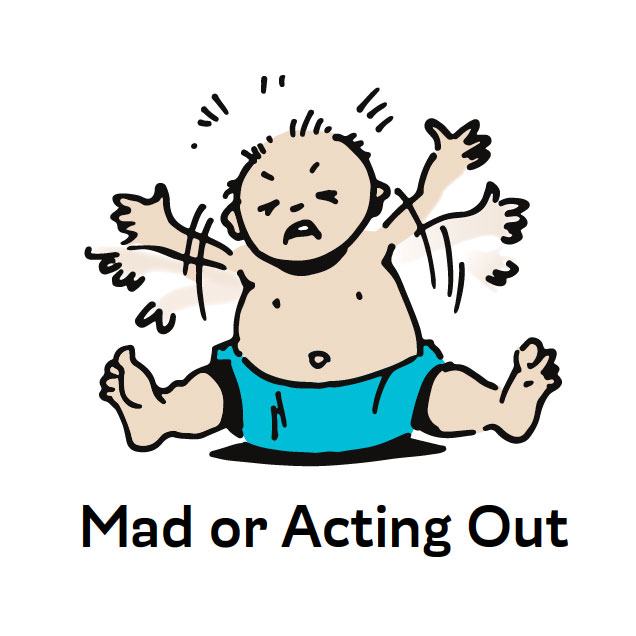
Angry or Acting Out
Showing big feelings, pushing back against their world by crying, hitting, testing and pushing limits, being demanding or defiant, being easily frustrated, disrupting activities, throwing things, or having tantrums
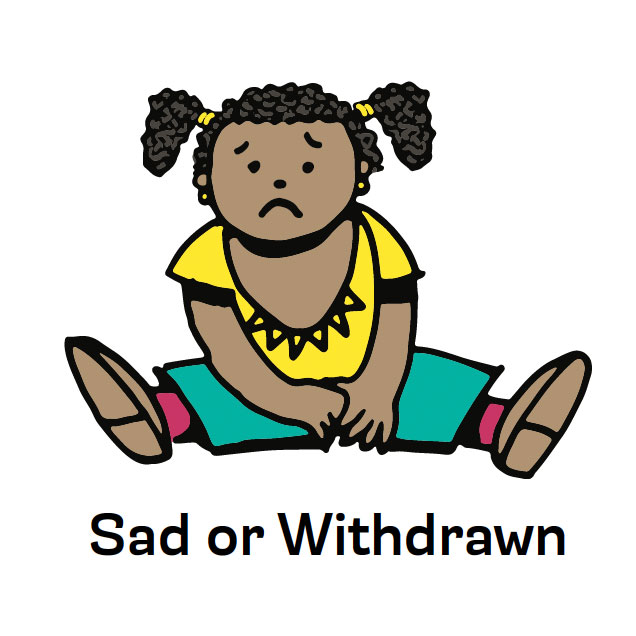
Sad and Withdrawn
Keeping feelings inside, moving away from their world by looking unresponsive, making little eye contact, stop giving cues for attention, stop making choices, giving up, looking helpless, whining, never testing limits, limiting exploration, playing alone due to difficulty joining groups, looking “independent”.
Although anger, aggression and acting out behaviors often draw more attention and concern in home and childcare settings, withdrawn behaviors are equally worrisome and important to evaluate and address.
Understanding difficult behaviors as the child’s language of distress shifts the focus from trying to simply extinguish the unwanted behavior to trying to understand what the child’s underlying feeling of distress or unmet need might be and then responding to meet those needs.