
- This event has passed.
From Early Social Interactions to Language Development: Brain-to-Brain Synchrony and Natural Social Stimuli – August 12, 2026
August 12, 2026
9 – 10:30am Pacific Time (Seattle) / 12 – 1:30pm Eastern
via Zoom
BARNARD CENTER FREE LECTURE SERIES
From birth, infants engage in rich social interactions that rely on both verbal cues (e.g., caregiver speech) and nonverbal signals (e.g., body odors). My research examines how early multisensory social input shapes social brain development and supports later language outcomes.
In earlier work, I investigated social chemosignaling in Autism Spectrum Disorder (ASD). Using subliminal presentation of natural (fear-related body odor) and synthetic chemosignals, I demonstrated altered autonomic and behavioral responses in adults with autism, suggesting that atypical processing of social olfactory cues may contribute to difficulties in social communication.
Extending this work to early development, I examined how maternal chemosignals influence infant social behavior and neural coupling. Using ecological interaction paradigms and dual-EEG, I found that exposure to maternal body odor enhances infant–adult brain-to-brain synchrony, increases attention to faces, and promotes positive arousal and approach behavior during interactions with an unfamiliar adult. To examine whether mother–infant inter-brain synchrony is influenced by maternal behavior, I examined its association with two well-studied maternal behavioral orientations: sensitivity and intrusiveness. I found that higher maternal sensitivity was associated with greater mother–infant neural synchrony. Maternal sensitivity has consistently been linked to positive socio-emotional outcomes and language development.
My current research focuses on how early caregiver–infant interactions support language development. In longitudinal studies, I found that maternal sensitivity, infant-directed speech (IDS), and conversational turn-taking as early as 3 months predict language outcomes in the third year of life. Furthermore, early brain-to-brain synchrony between caregivers and infants predicts later language outcomes and mediates the association between maternal sensitivity and language development.
Together, this work identifies the importance of early social interactions for social development and language acquisition, and highlights brain-to-brain synchrony as a potential mechanism linking early caregiving to long-term developmental outcomes.
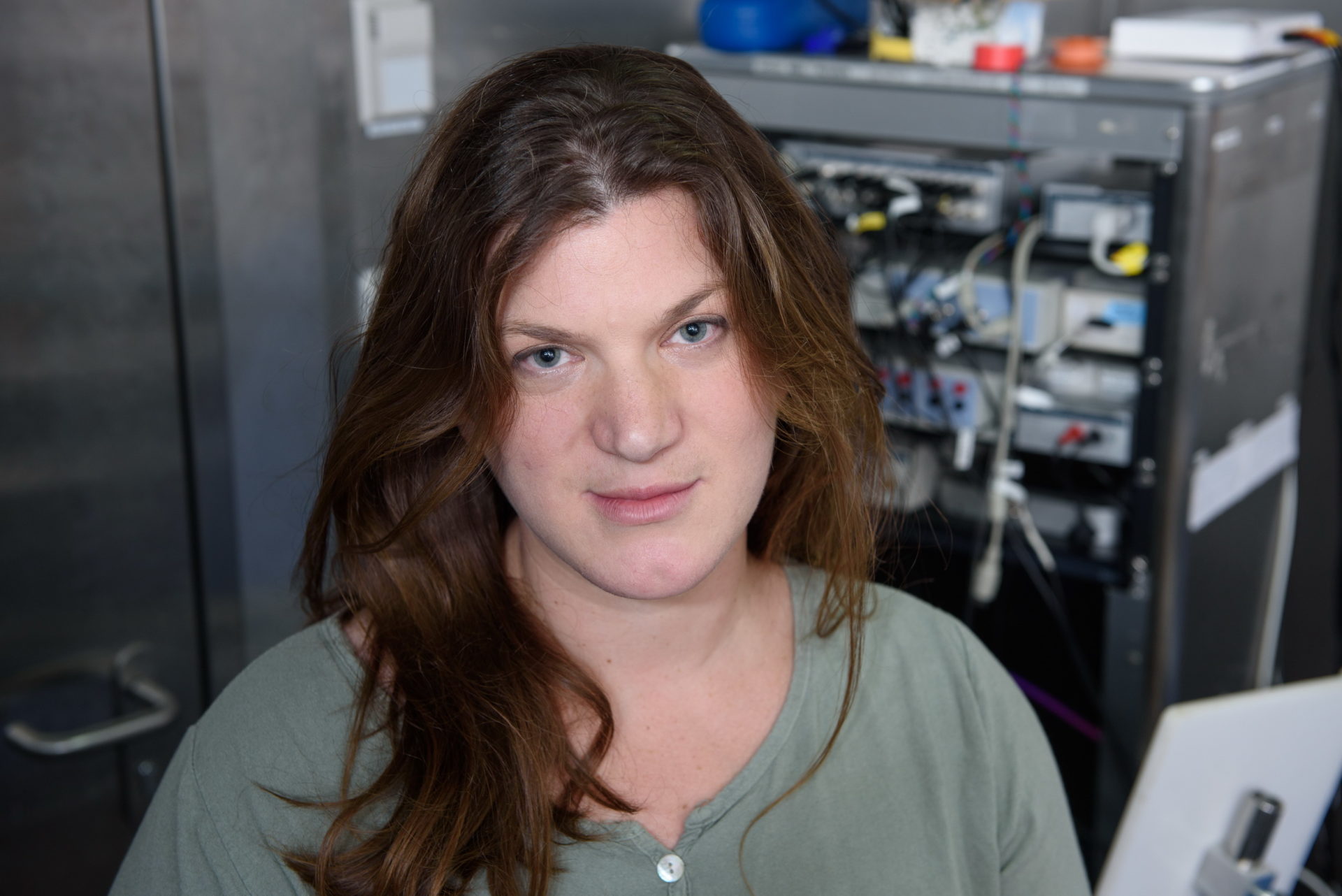
YAARA ENDEVELT, PhD
Dr. Yaara Endevelt-Shapira is a Research Scientist at the Institute for Learning and Brain Sciences (I-LABS) at the University of Washington. Her research focuses on human social interactions and social neurodevelopment, using behavioral and neurophysiological methods to measure interpersonal behavioral and neural synchrony between infants and adults during natural interactions.
Dr. Endevelt-Shapira earned her B.Sc. in Food Engineering and Biotechnology from the Technion, Israel Institute of Technology. She completed her M.Sc. and Ph.D. in the Department of Neurobiology at the Weizmann Institute of Science, where she worked with Prof. Noam Sobel on olfaction and social chemosignaling in autism spectrum disorders. She then conducted her postdoctoral training at the Center for Developmental Social Neuroscience at Reichman University, working with Prof. Ruth Feldman on social chemosignaling during early development, including the use of dual-EEG to assess adult–infant inter-brain synchrony.
Her work has shown that exposure to maternal body odor during interaction with an unfamiliar female increased brain-to-brain synchrony as well as infant’s visual attention to faces, positive arousal, and approach behavior. In addition, maternal behaviors, such as sensitivity and intrusiveness during face-to-face interactions, are associated with levels of inter-brain synchrony between mothers and infants. In her current research, she employs longitudinal designs to examine how early caregiver–infant interactions at 3 months of age, parental speech input and responsiveness, as well as brain-to-brain synchrony, and physiological measures (e.g., heart rate) relate to later language development and school readiness.